
Ever imagined yourself meditating in the high Himalayas, isolated, miles away from cars and modern conveniences? The Lapchi Kang Trek might just be the exact spiritual adventure your soul has been seeking.
Meaning “Outer Pass” in Tibetan, Lapchi Kang sits at a unique cultural and geographical confluence where Nepal meets Tibet. Geographically isolated from the rest of Nepal, this hidden Himalayan holy land is nestled in the rugged Rolwaling region of the Dolakha District. Left untouched by commercial tourism, the entire valley forms a living mandala—guarded by towering peaks and steeped in the powerful spiritual energy of ancient yogis and saints, most notably the great 11th-century sage Saint Milarepa.
If you ask a random local in Kathmandu if they’ve heard of Lapchi, you are likely to get a blank stare or a confused reply. Yes, it remains one of Nepal’s best-kept secrets, offering an absolute wilderness experience where you are unlikely to cross paths with any other trekking groups.
We are on a spiritual journey to Lapchi Village, which is in Dolakha near the China-Tibet border. Today’s destination is Lamabagar, which is an approx 200km ride from Kathmandu. We are entering the Gaurishankhar Conservation Area. Our guide will pick you up early in the morning on TK time from your hotel or residence in Kathmandu. Depending on your preference, we have an option to take a local bus/jeep that runs till Lamabagar or take a private Jeep. We recommend a private Jeep for convenience and comfort, as it's a long 8 to 10 hrs drive. The road connecting Kathmandu to Singati is nicely paved, so the ride is pretty smooth. As we continue climbing higher, the road turns unpaved. Beyond Singati, we’ll see several hydro project tunnels, and we will also pass through one of them. The original road was damaged during the earthquake, so a new tunnel was built through the hill as an alternate route.
It’s quite a long tunnel, so driving through it is definitely an interesting experience, no less than a free hair-raising ride. After almost 10 hours of a long ride, we’ll finally arrive at Lamabagar, a riverside settlement. Here you get to enjoy the wonderful view of the waterfall. There is also a monastery in Lamabagar if you’d like to visit.
Starting Point: Lamabagar (Approx. 1,950 m)
Destination: Lumnang (Approx. 2,300 m)
Duration: 2 Hours Drive
Difficulty Level: Easy
Route Type: Scenic Mountain Road / Off-Road Jeep Track
Highlights: Tama Koshi River, Tama Koshi Hydropower Reservoir, Dark Dam Tunnel, River Confluence, Dramatic Cliffs, Lumnang Village, Local Monastery
After spending the night in Lamabagar, the journey continues with a short yet remarkably scenic drive to Lumnang, the gateway settlement on the Lapchi Valley Trek. Although trekkers previously had to begin walking directly from Lamabagar, recent road construction associated with the Upper Tama Koshi Hydropower Project has significantly improved access to the region. As a result, today's journey is more comfortable while still offering plenty of adventure and unforgettable mountain scenery.
Following breakfast, we board a pre-arranged local jeep and begin driving alongside the roaring Tama Koshi River. After crossing the Tama Koshi River, just beyond Lamabagar, we shortly reach a permit checkpoint. Here, trekking permits are verified before entering the more remote sections of the valley.
One of the first major highlights of the day is the impressive reservoir created by the Tama Koshi Hydropower Project, Nepal's largest hydropower development.
Furthermore, the drive includes one of the most thrilling experiences of the entire trek—a long, dark tunnel constructed for the Tama Koshi Dam. Unlike conventional road tunnels, this passage is unpaved with no internal lighting. Therefore, as the vehicle enters the darkness, visibility drops entirely, creating an exciting and slightly nerve-racking experience. Small water-filled potholes line sections of the tunnel, and the seemingly endless darkness makes every traveler eagerly anticipate the distant light at the exit. Although it is possible to walk through the tunnel, most trekkers prefer using a local jeep for this section, especially because it is safer, quicker, and considerably more comfortable.
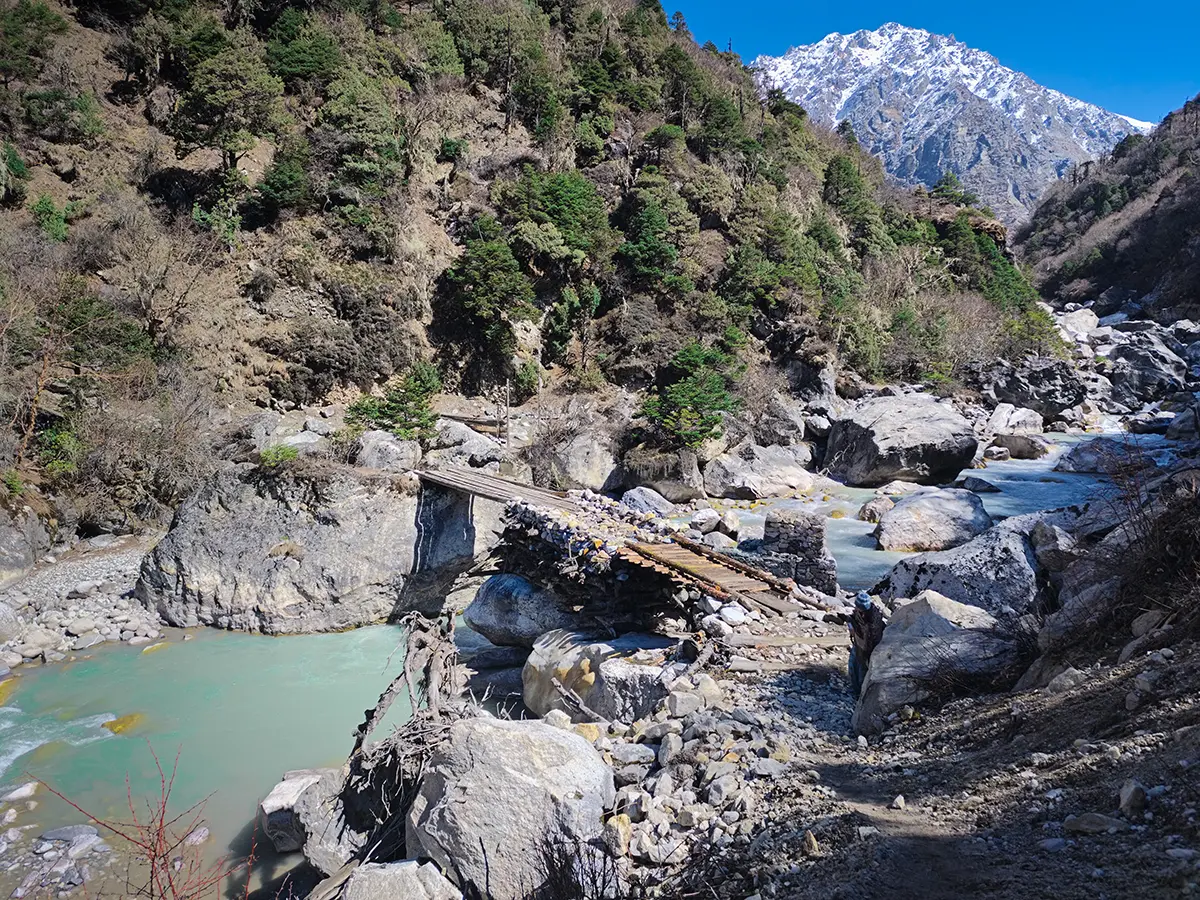
After emerging from the tunnel, the road continues to follow the powerful Tama Koshi River upstream. In addition, the scenery becomes even more impressive as deep gorges, waterfalls, and rocky mountain slopes dominate the landscape. At one point, we reach an important river confluence where the Lapchi River merges with another river flowing down from the Tibetan Plateau in China. Once united, these waters form the mighty Tama Koshi River, which powers Nepal's largest hydropower station with a capacity of 456 megawatts.
Meanwhile, the surrounding landscape becomes increasingly dramatic. Towering cliffs rise above the road, while the turquoise waters of the Tama Koshi carve their way through the rugged Himalayan terrain.
Shortly afterward, the road divides into two distinct routes. The right-hand track heads toward Chuwar and the China–Tibet border area. However, our journey takes the left route, gradually entering the remote and culturally rich Lapchi Valley.
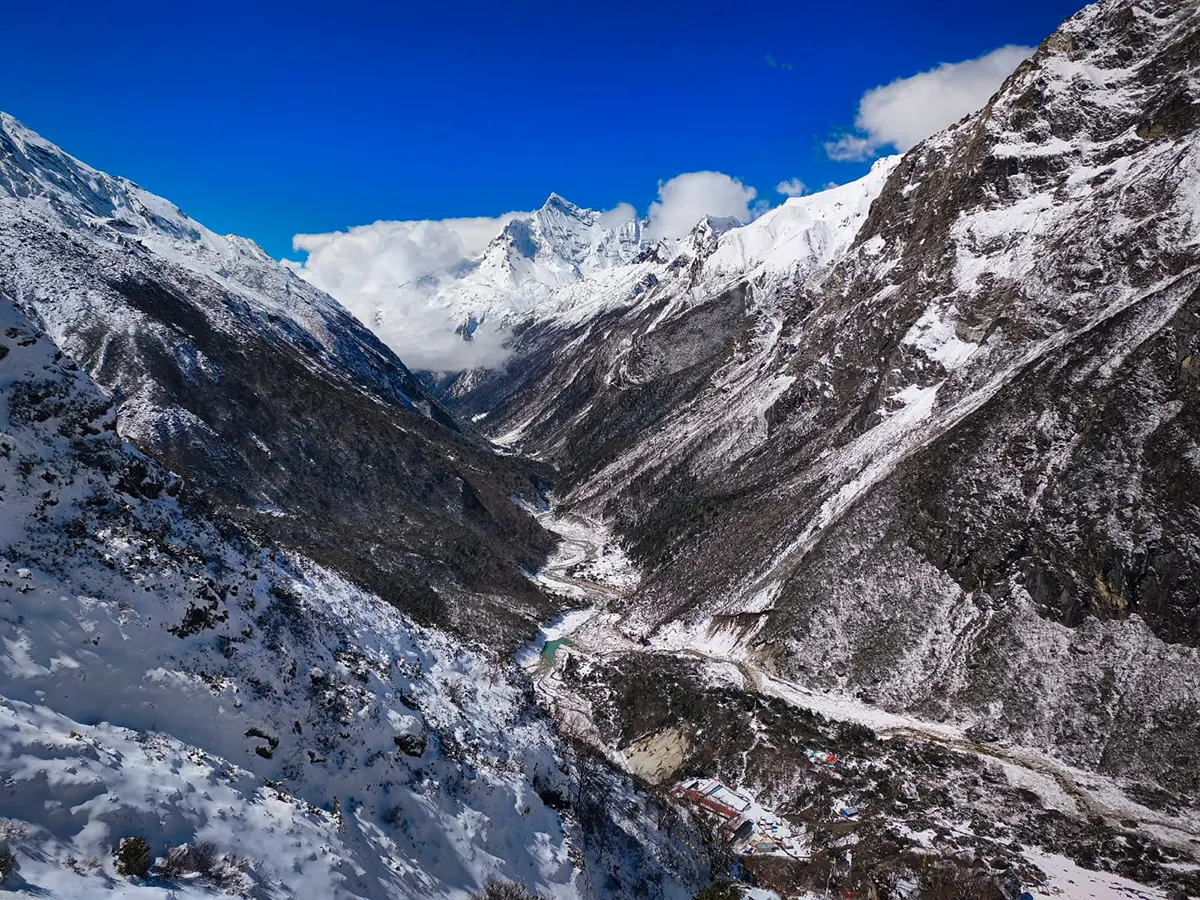
The drive continues on a narrow, hanging road carved into steep mountainsides. On one side, sheer cliffs tower overhead, while on the other, the river rushes through the valley far below. We can also see some old walking trails used by locals hanging on cliffs, a reminder of how inaccessible Lapchi was. Consequently, the route offers spectacular views and a genuine sense of Himalayan adventure.
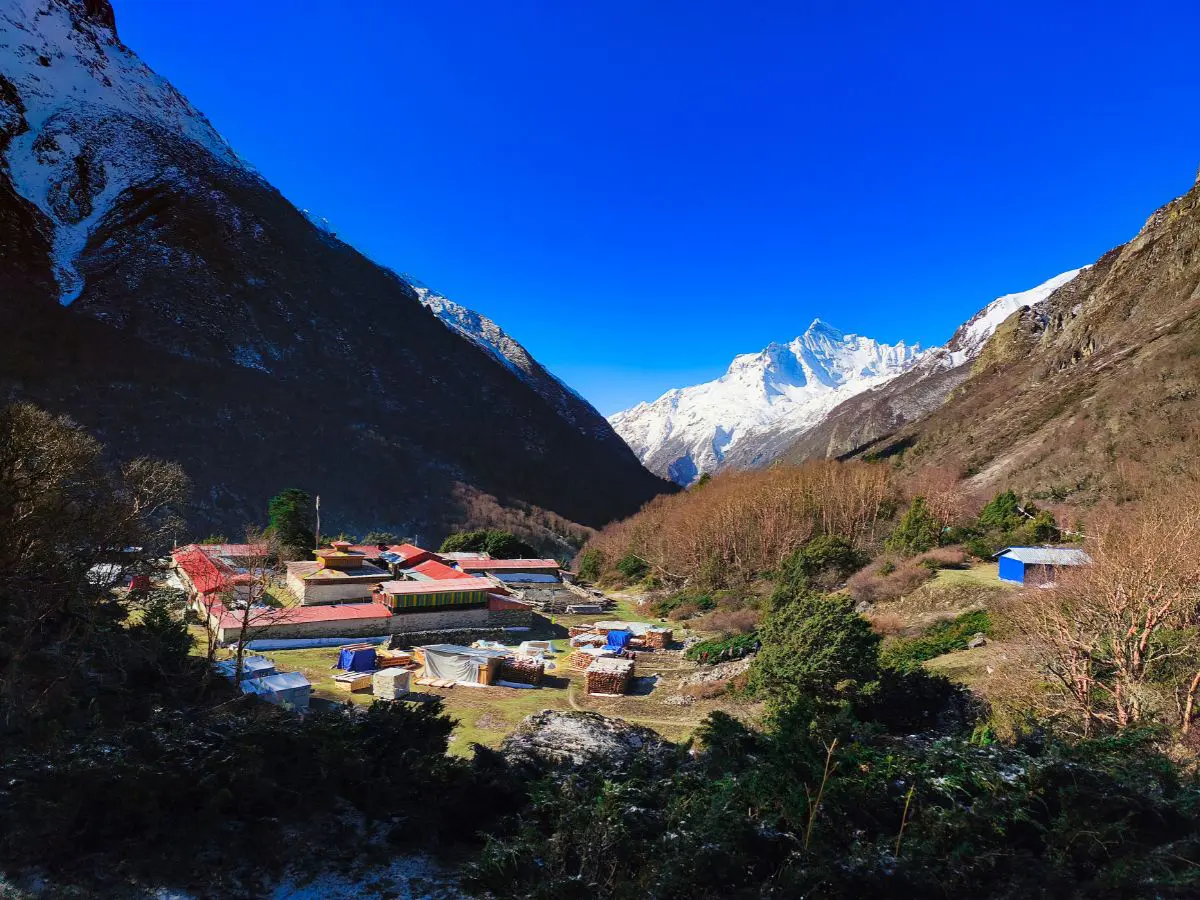
By afternoon, we arrive at Lumnang, a peaceful seasonal settlement used by residents of Lapchi. Although small, the village provides a fascinating glimpse into local mountain life. A modest monastery overlooks the settlement, adding a spiritual atmosphere to the surroundings. Because tourism in the area is still in its early stages, accommodation is available in a few simple yet welcoming homestays operated by local families.
Finally, after checking in, there is ample time to explore the village, interact with residents, and observe their daily routines. Likewise, the surrounding hillsides provide excellent opportunities for short walks and photography. As evening settles over the valley, the tranquil setting of Lumnang offers the perfect introduction to the remote beauty and rich culture that await deeper inside the Lapchi region.
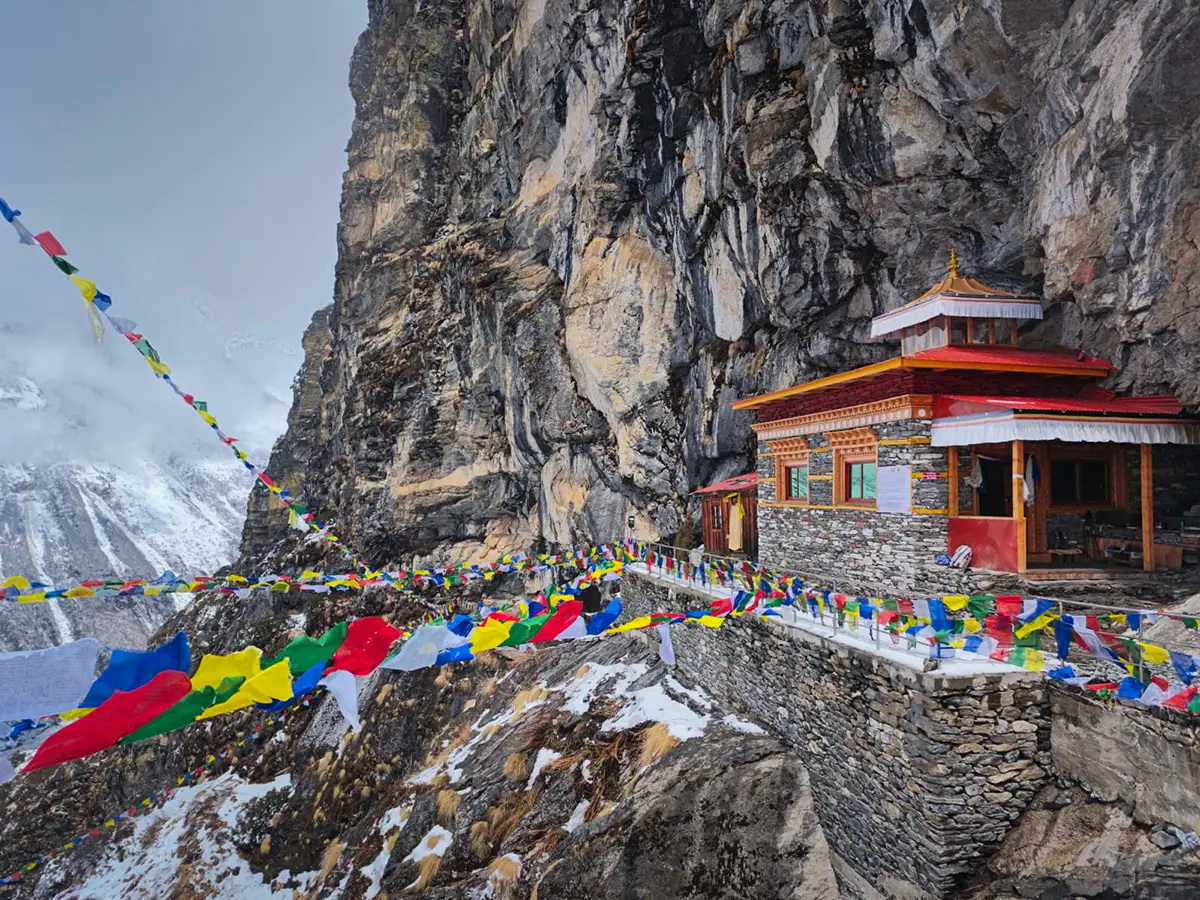
There are several hermitages around Lapchi. We’ll explore as much today. We’ll first enter the TK years-old Lapchi Monastery. A 10-minute walk from Lapchi is Dudul Cave. A short 5-minute walk from Lapchi Monastery, atop a hill. Then there’s a Lungthen Cave, 20 minutes walk from the Lapchi Monastery. We’ll spend our day exploring the nearby hermitages around the Lapchi Monastery today. Then we’ll hike to Rechen cave. En route, we’ll also visit Tiger Nest Cave. We’ll come back to Lapchi Monastery for the overnight.
Today, we’ll hike to Sephuk Cave, located above all the hermitages of Lapchi. From the Lapchi Monastery, it is 2 hours steep climb. Rechen Monastery is just above Lapchi Monastery. Although it looks near, it takes 30 minutes to reach there. En route, we’ll also get to visit Tiger Nest Cave en route to Rechen Monastery. From the Rechen Monastery, we’ll continue our climb towards Sephuk Cave. Although the trail is steep, the stone steps have been built all the way to Sephuk. We can see the whole Lapchi Valley from here, with mountains. Just outside Sephuk Cave, a little further lies the watersout, believed to have been gifted by Mahakala during Milarepa’s meditation. Throughout the year, the water is reported to maintain a consistent level even during the drought season, and never freezes even during winter. A little further from the Mahakala waters is a meditating spot. There is also a footprint of Milarepa’s footprint around the premises of Zephug Cave. We’ll retrace our way back carefully. En route back, we can also visit
Cave of revolution of all secrets. Although the trail is technical to the cave. After spending some time, we’ll come back to Rechen Monastery.
Overnight at Rechen Monastery
We’ll visit Lapchi Village, which is 30 minutes walk. There is also the Goat Nest Cave in Lapchi Village, where you are most likely to encounter the herd of bluesheep. A TK minutes further from the Lapchi Village, through the meadow, is the TK monastery. From here, we can also see the tower built near the border of Nepal and Tibet-China. Since it’s a highly sensitive border zone, we won’t go anywhere near the border. There is also Ramding Noma on the other side of the border. For safety reasons, we are not permitted to cross the border.
We bid farewell to our lovely hosts in Lapchi and retrace our steps to Lamabagar. Today's hike is more comfortable as we gradually descend, enjoying the mountain scenery. Upon reaching Pangchemo, a pre-arranged jeep transfers us to Lamabagar. Once again, we’ll pass through the dark tunnel and check our permits just before reaching Lamabagar.
We can either take a private jeep or take the local bus that runs from Lamabagar at TK o'clock.
We’ll stop en route to enjoy the Dal Bhat once more. Our guide will drop you at your hotel or residence in Kathmandu Valley. In the evening, we’ll host a farewell dinner with typical Nepali Cuisine and cultural Dance in Thamel. Share your experience with us, and if you have any recommendations.
